























 Question and Answer


 Was Toyotomi Hideyoshi a great Noh actor?
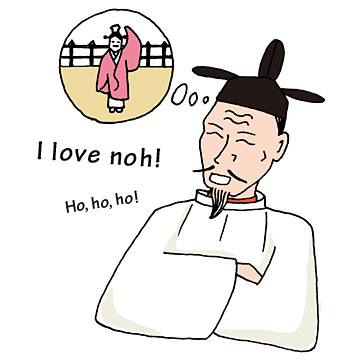
Toyotomi Hideyoshi was a feudal lord who unified Japan in the 16th Century. If you survey the changes in the art of Noh, you will find that he played an important part. He was immersed in the world of Noh as a performer himself, and actively protected the art as a man of power.
After learning Noh at the Konparu School, Hideyoshi cared very much for acting, and held so many performances. Once he held a three-day Noh performance featuring some leading generals, including Tokugawa Ieyasu (the future first shogun in the Edo era) and Maeda Toshiie (the future lord of Kaga Domain). Hideyoshi devoted himself to the performance, and played 16 pieces in the three days. The program consisted of so many pieces, some of which are hard to play; you might be surprised that Japanese medieval warlords were such great actors. Nevertheless, it is not sure if the performances were of high quality, because you could say that the man of power held the program to satisfy himself. It is said that Hideyoshi did not have a sufficient skill in chanting.
You would be also able to measure his self-contentment by the facts that he made playwrights to create several new pieces for his performance to idealize his footprints. “Akechi-uchi” is one of the famous pieces created by order of Hideyoshi, which was based on his retribution of Akechi Mitsuhide (the assassin to Oda Nobunaga.) It is believed that Hideyoshi performed the piece himself.
Hideyoshi also had a great influence on the Noh community. He patronized Konparu-dayū and financially supported the four Yamato Sarugaku theatres. On the other hand, he forced to attach the actors outside of the four theatres, including the Uji and the Tanba theatres, to the four major ones. It is not too much to say that Hideyoshi started to make up the future main currents of the four Yamato Sarugaku theatres.
(Aug 21, 2008)


- Question 164An Italian opera based on Noh?
- Question 163In which area of Japan does a remnant of the “Shundō” school survive?
- Question 162Were there models for Noh masks?
- Question 161How many kinds of Noh mask are there?
- Question 160What is the record number of performances in one day?
- Question 159Does the idiomatic phrase “Iza Kamakura” come from Noh?
- Question 158Why is “Taiten” performed only at the time of an era-name change?
- Question 157What is the play in which real instruments appear?
- Question 156Why is the Hōshō school known as “Utai Hōshō”?
- Question 155Which place has produced many Noh mask makers?
- Question 154Who was the rival of Kan’ami and Zeami?
- Question 153Are there any everyday terms that originate in Noh?
- Question 152Did samurai “Noh fanatics” sometimes go too far?
- Question 151Are there any unusual Noh theatres?
- Question 150What is karagoto?
- Question 149Was there a Noh stage in Edo Castle?
- Question 148Is it possible to learn Noh performance for personal interest?
- Question 147What sort of old customs live on in Noh plays?
- Question 146What kind of plays are suitable for old actors?
- Question 145What is “kaburimono”?
- Question 144Why do singers put their fans in front of their knees?
- Question 143A Noh version of the Ninth Symphony?
- Question 142Which pieces are recommended for beginners?
- Question 141Are there two spaces on the Noh stage?
- Question 140Which performing arts has Noh influenced?
- Question 139Were there Noh actors who worked as warriors?
- Question 138Do you need any qualifications to become a Noh performer?
- Question 137Why is the back panel called kagami-ita?
- Question 136Has anyone from a Noh family been outstanding in another field?
- Question 135Is it possible for Noh actors to change to different schools?
- Question 134What is “XX Yashiki” found on old maps?
- Question 133What is the Sagi School of kyōgen?
- Question 132What role does the fan play in Noh performance?
- Question 131Does the bell in "Dōjōji" really exist?
- Question 130Tell us about unique Noh plays surviving in rural areas.
- Question 129Is it true the cypress stage floor is alive?
- Question 128What sort of a play is “Utsubo-zaru,” which features a juvenile role?
- Question 127What are the origins of the designs of kendai?
- Question 126How are costumes used for many years cared for?
- Question 125How do tsure and waki actors choose their costumes?
- Question 124What are the design rules for Noh fans?
- Question 123Was Natsume Soseki a Noh lover?
- Question 122Which kyōgen piece is based on a French conte?
- Question 121How do you hang the big bell for “Dōjōji”?
- Question 120What is the link between “Yoroboshi” and Shitennō-ji?
- Question 119Was Ii Naosuke a Noh/Kyogen playwright?
- Question 118Who was the actor-turned-daimyō of the Edo Period?
- Question 117What is Shinji-mai, a ritual dance with strong links to Noh?
- Question 116How did Noh become a ceremonial performance for the Edo Shogunate?
- Question 115Which opera is based on “Sumidagawa”?
- Question 114What was the origin of kogaki?
- Question 113Where does the sliding walk in the Noh performance come from?
- Question 112Was author Izumi Kyōka from the family of a Noh performer?
- Question 111Which Japanese films show the influence of Noh?
- Question 110Does each school have its own design patterns for the fans?
- Question 109Why are Tenkawa shrine and Noh closely connected?
- Question 108What role did koutai play in terakoya in the Edo period?
- Question 107Do the costumes vary with the pieces being performed?
- Question 106Does the term "shibai" come from Noh?
- Question 105Which Noh play was imported from a foreign country?
- Question 104What new pieces were performed by Hideyoshi?
- Question 103Which military commander was a drum virtuoso?
- Question 102What kind of people partonized Noh performers in the Warring States period?
- Question 101Did Zeami finally manage to return to Kyoto?
- Question 100What kind of relationship exists between shoulder drums and hip drums?
- Question 99What are some benefits of Noh vocalization?
- Question 98Why is “Hagoromo” so popular?
- Question 97Japanese people didn’t used to have back pain?
- Question 96What was the young Benkei like?
- Question 95What is Kanjin-no?
- Question 94Is the running time for a Noh play today the same it was in olden times?
- Question 93When did overseas Noh performances begin?
- Question 92Why are there many Noh stages on Sado Island?
- Question 91What kind of jobs does a kōken do when he is off stage?
- Question 90Does the Noh stage have a flat surface?
- Question 89Are the Japanese socks specially designed for the Noh performance?
- Question 88Are Noh performers all-rounders?
- Question 87Are there any solo performances by Noh musicians?
- Question 86Why go to su-utai?
- Question 85Is nakairi an interval?
- Question 84What special way is the small tabor played in Dojoji
- Question 83What is Waki-dome?
- Question 82How are spider's webs and threads used in Tsuchigumo?
- Question 81What is Rōsoku-noh?
- Question 80What kind of place is the setting for Utou?
- Question 79Is an ad lib a result of the performance?
- Question 78Is there a play in which the audience takes a part?
- Question 77Why do actors stand still for such a long time?
- Question 76What is the voice from behind the curtain?
- Question 75How many plays are performed?
- Question 74Do actors always change their costumes at the same moment?
- Question 73Why do musicians call out?
- Question 72What are the basic sounds of the small tabor?
- Question 71Is a drum always involved in the music?
- Question 70How much preparation time is needed for the large tabor?
- Question 69How many times does the call bell ring?
- Question 68What is the basic tone in Noh music?
- Question 67What does "komi" mean in the Noh world?
- Question 66Who is watched at the beginning of the performance?
- Question 65What kind of characters appear in Noh?
- Question 64How many fue (flutes) does a fuekata (flute player) have in a lifetime?
- Question 63Are koutai a way to understand Noh more quickly?
- Question 62Is there a third passageway in on a Noh stage?
- Question 61Are Noh performances always the same?
- Question 60What is the purpose of kizahashi?
- Question 59What is meant by iroiri when discussing Noh costumes?
- Question 58Is there a Nohgaku museum?
- Question 57How do you pronounce syllables in the g series?
- Question 56Is the distance of the bridgeway fixed?
- Question 55What sort of a play is "Ran-no"?
- Question 54Who is in charge of dressing the leading actors?
- Question 53Was Sharaku, a great ukiyo-e master, also a Noh actor?
- Question 52What are the basic forms and movements of Noh acting?
- Question 51Who is the "overseer" of the stage?
- Question 50Which side of the stage ranks higher, right or left?
- Question 49Why do kotsuzumi players lick their finger on stage?
- Question 48Is it true that performers wear two masks one over another?
- Question 47What kinds of props are used for Noh plays?
- Question 46Is it true that Noh actors' hearts beat as fast as those of athletes?
- Question 45How can reciters keep themselves in unison, while they are ten or more?
- Question 44Can Noh actors wear glasses on stage?
- Question 43Is there any influence of “Shōmyō” upon Noh chanting?
- Question 42Why do supporting actors not wear masks?
- Question 41Is haori half-coat not used on the Noh stage?
- Question 40What is the difference of “noh-kan” (Noh flutes) from other flutes or pipes?
- Question 39What is “Okina”, the piece classified in Noh, but not a genuine Noh play?
- Question 38Was Toyotomi Hideyoshi a great Noh actor?
- Question 37How many times do performers rehearse a piece?
- Question 36What do the pillars around the Noh stage signify?
- Question 35Is there any special technique in making female masks?
- Question 34How do you operate the entrance curtain?
- Question 33Do Zeami’s manuscripts exist today?
- Question 32How do they start the torchlights used for outdoor performances?
- Question 31When did kagami-ita, the symbol of the Noh theatre, first appear?
- Question 30In what period did books of Noh chants become popular publications?
- Question 29Is Takigi-noh performed even if it rains?
- Question 28What is Hakama-noh?
- Question 27What kind of hair is used on noh masks?
- Question 26Which play has the most actors?
- Question 25Can a woman become a Noh performer?
- Question 24Is there any special aspect in a Noh actor's folding fan?
- Question 23Do actors ever fall from the stage?
- Question 22How heavy is a Noh costume?
- Question 21Which Noh stages are designated as national treasures?
- Question 20Is it true that there is no stage director for Noh plays?
- Question 19Is it true that Noh music does not have definite tonality?
- Question 18Why is the art called Noh?
- Question 17When and how was the first independent Noh theatre created?
- Question 16Why is the entrance curtain multicoloured?
- Question 15Why are Noh masks so small?
- Question 14 Nessun dorma, signore e signori!sun dorma, signore e signori!
- Question 13Is there any special etiquette to keep in mind in the theatre?
- Question 12Where can I find the best position in the auditorium?
- Question 11How long will "new pieces" remain new?
- Question 10Is hand clapping necessary for Noh programs?
- Question 9Why are Noh performers still active in their seventies?
- Question 8How do you care for Noh masks?
- Question 7What kinds of wigs are used in Noh plays?
- Question 6What kind of roles are played as kokata (juvenile actor) ?
- Question 5What does "hiraki" mean?
- Question 4Is the gangway bridge the same as the runway of Kabuki?
- Question 3Is it true that jars under the floor improve the acoustic effects?
- Question 2Noh and Kyogen, which is older?
- Question 1Is there any rule for the color of tabi (split-toed socks)?